


Galata and Karaköy, Istanbul: Beyond the Famous Tower

Galata and Karaköy, Istanbul, make one city walk feel deeply layered, with hillside charm flowing toward the Bosphorus and old Istanbul close by at every turn.

Istanbul does an absolutely incredible job at making you feel as though you have wandered into the middle of a story that began centuries before you arrived. I mean, you have, to be fair. In Galata and Karaköy (pronounced as kah-rah-köy, with the ö sounding like the French eu), that feeling comes particularly quickly.
It comes in the pull of the hill, in the glint of the water sparkling in Golden Horn below, in the sound of footsteps on stone, and in the strange confidence of a neighbourhood that doesn’t need to introduce itself loudly to be unforgettable. You arrive thinking you’ll be going for a pleasant walk, and then the city outdoes itself and raises the stakes.
We booked a guided half-day walking tour of the Galata hillside (you can book it for yourself here), which helped us better understand the area through its Golden Horn views and religious history, before we spent time in the streets on our own terms.
That all said, Galata is the former name of the Karaköy neighbourhood in Istanbul, set on the northern shore of the Golden Horn (although the two names still seem to carry different emotional weight). Karaköy feels tied to the water and the city's working rhythm, while Galata rises above it with a more dramatic mood, as if Istanbul decided to add theatre directly to your step count.
This part of the city suits travellers who like a place layered with landmarks of real weight, cafés that tempt you off course, old passages with a faded glamour, and views that appear exactly when you have started questioning your shoe choice.
If you want an area that feels personal, walkable, and deeply atmospheric, Galata and Karaköy are hard to beat.
Galata and Karaköy, Istanbul in Full Colour

The atmosphere begins around the Karaköy Underground Bazaar and Gateway, where the neighbourhood feels wonderfully practical before it becomes picturesque.
The area moves with the confidence of somewhere that belongs as much to daily life as to travellers. Shops open onto compact spaces, people pass through with purpose, and the city seems to remind you that beauty in Istanbul often arrives beside work and errands—the ordinary business of getting through the day.
From there, the shift toward Istiklal Caddesi brings a larger pulse into the walk. The avenue has a force of its own, carrying people forward through a constant hum of storefronts, voices, tram bells, and movement. It’s famous, yes, although what makes it interesting is not its fame alone.
For me, it was the way that the street seems to gather so many versions of Istanbul into one long, restless passage. You can feel the energy rise as you move uphill, which is visually inspiring (and physically exhausting, depending on how recently you ate and how full your stomach is during that uphill adventure).
This is also where the neighbourhood begins to feel less like a route and more like a mood in and of itself. Travellers searching for things to do in Galata and Karaköy will find plenty of named stops, but I found that the real pleasure lies in the spaces between them.
You know how it is: A doorway catches your attention. A side street seems to lean into the shadow. A café appears at the exact moment you begin to believe caffeine is a medical need. Galata and Karaköy work because their atmospheres don’t centre on a single landmark… they spread through the walk itself.
What I loved most was the way the area felt unforced, offering beauty without smoothing over the signs of real city life. There’s texture in the façades and personality in the shopfronts, as well as a constant sense that the neighbourhood has more going on than any visitor could absorb in just one afternoon.
That, to me, is the best kind of travel feeling; you see enough to feel connected, while knowing there’s more to come on the next visit.
Historic Galata, from Bridge to Tower

The historic character of this area is not confined to one monument, which is why walking through it feels so satisfying. İBB Casa Botter is a graceful example, sitting along Istiklal Caddesi with an elegance that invites you to look up from the crowd.
Its Art Nouveau presence feels almost theatrical against the movement of the street, and there’s something so lovely about the way it interrupts the noise without seemingly needing to dominate it. Istanbul often hides refinement in plain sight, then waits to see whether you’re paying attention to it.
The Roman Catholic Church of Santa Maria Draperis offers a quieter kind of historic pause, since it’s tucked into the flow of the avenue, making its presence especially affecting. A little farther along, Sent Antuan Kilisesi brings a warmer and more visible sense of calm to the street. These churches are important, because they help you understand Galata as a place shaped by multiple cultural currents.
In a city known for grand imperial monuments, these sacred spaces feel intimate, as though they hold memories close to the pavement.
Galatasaray High School (Galatasaray Lisesi) adds an even different kind of gravity. Even from the outside, the building emanates the dignity of an institution that has watched the avenue change around it. Standing near it, you feel how education, public life, and urban memory can shape a district as strongly as any monument.

This is where a Galata, Istanbul travel guide becomes most useful: they’ll do more than just send you to photo stops. Of course, the whole point is to notice how the neighbourhood’s past still forms the texture of the present.
The broader area deepens that feeling through places like Galata Bridge and Bankalar Caddesi, which give Karaköy its connection to movement, trade, and the water itself. The bridge pulls your eye back toward the historic peninsula, while Bankalar Caddesi carries the authority of a street once tied to finance and commerce.
Together, they help explain why this district feels so substantial. It has been a place of crossing, exchange, and reinvention for generations, and that history has not disappeared beneath the cafés and stylish storefronts.
It’s still there, underfoot and overhead, making even a casual walk feel totally charged.
Where to Eat Between the Hill and Harbour
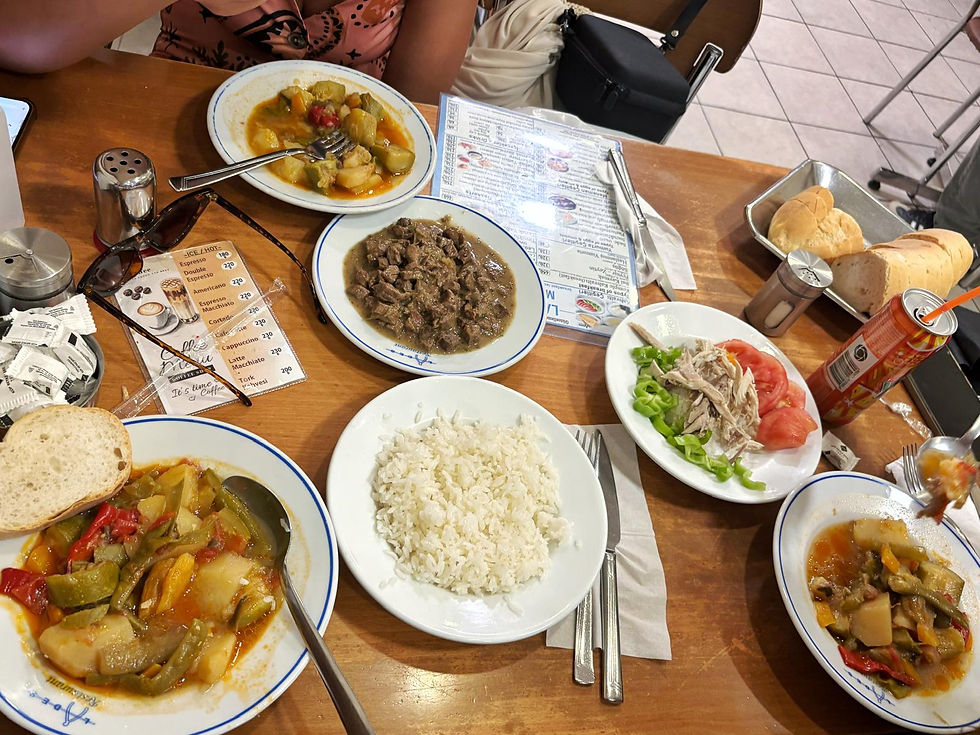
By the time you reach Cicek Pasaji, the neighbourhood begins to speak more clearly through appetite. AKA: This is the language I speak the most fluently. The passage has an old-world sociability that suits the pace of dining in Istanbul, where a meal can feel like something to settle into rather than something to complete.
While we couldn’t stop to eat in the midst of our tour, we took note of where to circle back to after it came to an end.

The setting invites you to slow down, which is deeply convenient when your legs have started sending strongly worded messages after the hills. There is a certain pleasure in entering a covered space where the city softens slightly, and dinner begins to feel like part of the architecture.
Avrupa Pasaji has its own enclosed charm, with a browsing rhythm that makes the surrounding streets feel more layered. I absolutely love places like this, because they change the scale of a neighbourhood. One moment you are part of the movement of Istiklal, and the next you are inside a passage where details matter more than direction!
The food scene around Galata and Karaköy benefits from that same shift in scale. A snack can burn itself into your memory simply due to the street in which you found it. For instance, even a simple coffee can become a pause you remember because the room had character. This is exactly how Istanbul gets you to fall in love with it, turning small breaks into unshakeable emotional evidence.
Passage Hazzopulo brings a more tucked-away feeling, and it is the kind of place that makes a wandering day feel wonderfully unhurried. The surrounding area is full of chances to eat casually or linger somewhere more atmospheric, which makes it ideal for travellers who prefer meals that grow naturally out of the day.
Any Karaköy, Istanbul travel guide should leave room for this kind of appetite-led wandering, because some of the best stops in the neighbourhood are the ones you notice because you are moving slowly enough to be tempted.

The food scene here also has a range without losing its sense of place. Near the water, Karaköy feels modern and sociable, with restaurants that make the most of the district’s position.
Higher up, Galata leans into café culture and intimate dining rooms that feel connected to the surrounding old streets. Rooftop meals add another layer, especially when the light begins to change and Istanbul starts to behave as if it knows exactly how beautiful it is. Totally vain…but it’s completely within reason.
My only serious advice is to avoid treating meals as interruptions to sightseeing. In Galata and Karaköy, eating well is part of understanding the neighbourhood.
The Artful Side of Karaköy
Narmanli Han captures the area's creative side with a calm that feels especially welcome after the energy of Istiklal. Its courtyard atmosphere gives the neighbourhood a moment's breath, while its restored character shows how the past can be brought forward into the present without losing all its softness. Places like this are part of what makes Galata and Karaköy so appealing now.

The district is not frozen in nostalgia. It keeps adapting, and that adaptation gives the streets a lively sense of possibility.
From there, the climb toward Galata Tower brings the neighbourhood’s drama back into focus. The tower has a presence that is difficult to overstate, even if you are seeing it only from the outside. It anchors the hillside with the assurance of a landmark that knows people have crossed oceans to stand beneath it.
The relationship between Galata Tower and Karaköy is one of the great visual pleasures of this part of Istanbul, because the waterfront below and the stone height above seem to belong to the same story. You feel the connection through the slope of the streets, especially when the tower appears between buildings and briefly makes everyone around you reach for a camera.
The district's creative character also comes through in its cultural spaces. Around Karaköy, contemporary art feels close to the neighbourhood's daily rhythm, with museums and gallery life giving the waterfront a more modern edge.
The area has become a place where old commercial buildings and newer cultural projects can speak to each other, which is one reason it feels so compelling for travellers who want more than a pretty view. There’s a strong design sensibility here (although it still feels tied to the city, rather than sealed off from it).
What keeps the creative side from feeling overly polished is the way it shares space with ordinary Istanbul. You might notice a beautiful interior, then step back onto a street where someone is hurrying to work. You might admire a restored courtyard, then hear the traffic return a moment later.
That closeness between style and daily life gives the neighbourhood its personality, allowing Galata and Karaköy feel current without losing the marks of time, a difficult balance the area handles with unusual grace.
Where Istanbul Meets the Water
Tünel Meydanı Sokağı makes a fitting turn in the walk, connecting the hillside’s historic ambiance with the routes that draw you back toward Karaköy and the water. After moving through passages, courtyards, and tower streets, the area around Tünel feels like a place to collect the day for a moment. It’s also a reminder that this neighbourhood works best when you give it time to unfold around you.

The distances are manageable, yet the shifts in atmosphere are substantial, which means a slow day here can feel surprisingly full.
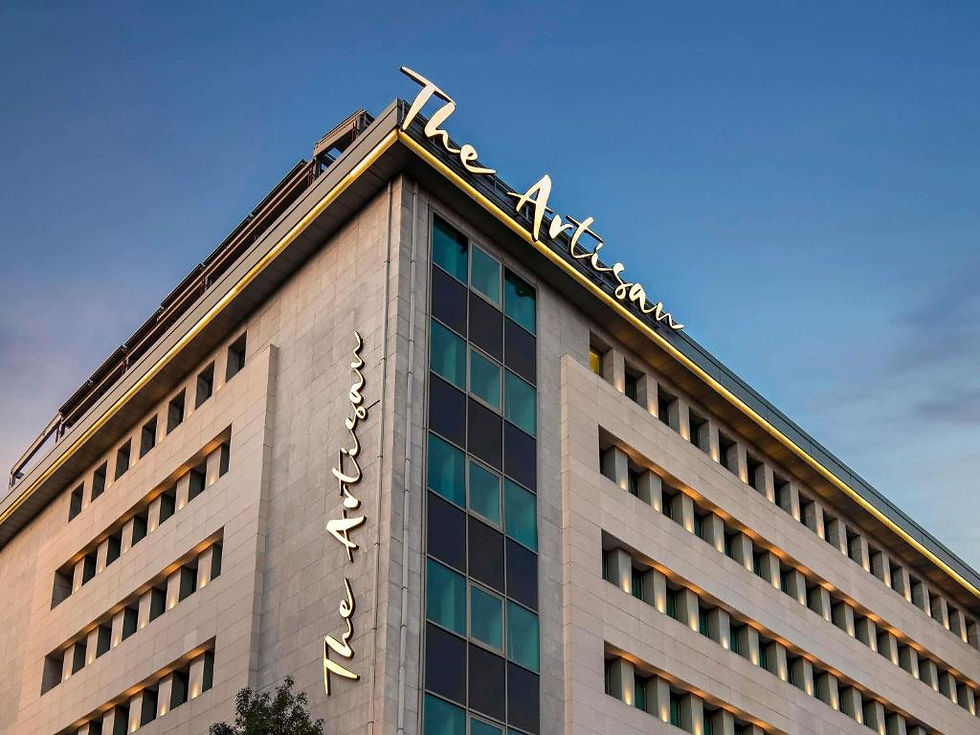
If you’re thinking about where to stay in Galata and Karaköy, location matters, as this area rewards those who like to return to the same streets at different times. We stayed at The Artisan Hotel, part of the M Collection, and it was perfectly situated to move between the hillside and the waterfront without making every outing feel like an expedition.
That ease changed how we experienced the neighbourhood; we could wander in the morning, come back later when the light softened, and let the area feel familiar instead of squeezing it all into a single block of sightseeing.
The Karaköy waterfront gives the district a sense of openness after the enclosed feeling of the hillside. Near the harbour, Istanbul feels wide awake, with ferries crossing the water and the city stretching toward the Bosphorus. Galataport has brought a more polished waterfront experience to the area, but the real appeal is still the simple act of standing near the edge of the city and watching Istanbul move.
The view doesn’t feel decorative. It feels essential because the water explains so much about why this neighbourhood has always mattered.
All in All
Galata and Karaköy are not rewarding because they can be neatly summarized. They stay with you because the day gathers in layers.
You remember the incline of the street as much as the landmark, the pause inside a passage as much as the view, and the small decisions that made the walk feel like your own. This is the Istanbul I would encourage travellers to seek out: not rushed, not over-planned, and not reduced to a handful of famous stops.
Give Galata and Karaköy enough time to unfold, and the neighbourhood will do what the best places always do: show you all of their magic.
Book your guided half-day walking tour of the Galata hillside by clicking here!

Wow! I never realized that the cities of Galata and Karaköy, Istanbul, had so many layers! This is a wonderful article, Emily!