


Grand Bazaar and Spice Bazaar, Istanbul: A Market Guide

Updated: Sep 13
Visit the Grand Bazaar and Spice Bazaar, Istanbul, with practical guidance on understanding the markets, planning your visit, and shopping with confidence.
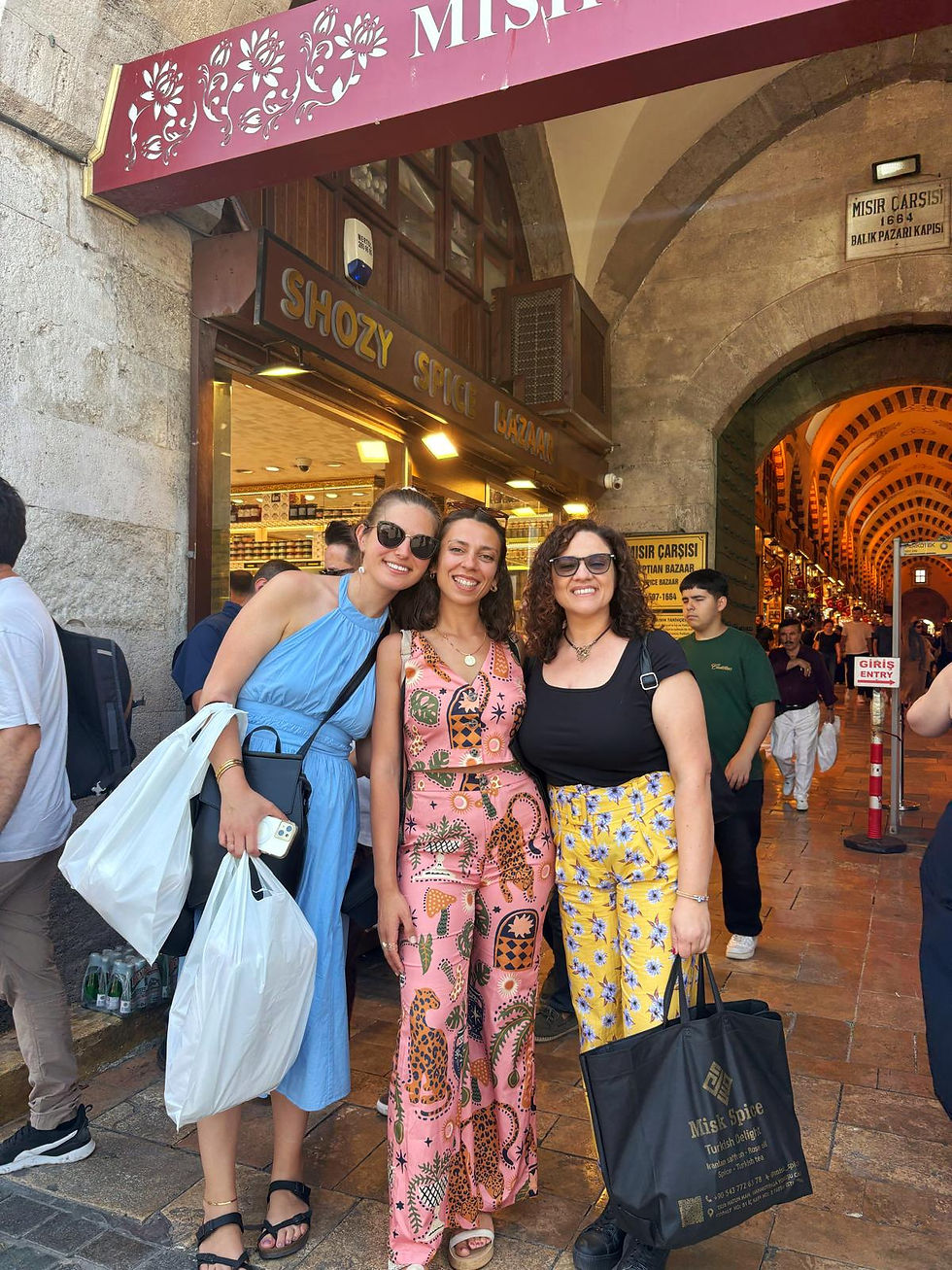
There is no denying that Istanbul has you constantly looking around. The bazaars do something far more theatrical, though… They pull you in by the sleeve. They shine lamps at you from above. They make a packet of sumac feel like a deeply personal life decision.
Visiting both the Grand Bazaar and the Spice Bazaar feels wonderfully touristy, yes, but it’s rooted in something much older than tourism. Trade still gives these spaces their pulse, and conversation keeps them moving. Every shopfront seems to know how to catch your eye before your practical side can intervene.
I had expected both bazaars to be beautiful and I had expected them to be busy. I had wildly underestimated how much emotional stamina it takes to browse while admiring everything that catches your eye (which, let’s be honest here, was basically everything). There’s also this art to declining a myriad of offers with a smile as much as there is to bargaining while pretending your brain has not left your body.
The Grand Bazaar is truly grand in every possible sense. The Spice Bazaar, on the other hand, is smaller and more fragrant. Together, they deserve more than a rushed appearance on an itinerary; they are places to enter with curiosity as much as they are places to enter with comfortable shoes.
Grand Bazaar and Spice Bazaar, Istanbul History
The Grand Bazaar is often described as one of the oldest covered markets in the world. Once you step inside, that description starts to feel less like a mere travel fact and more like a warning label with tilework.
The bazaar dates back to the Ottoman era, and is the earliest heart formed around secure, covered market buildings where valuable goods could be stored and sold. Over time, that commercial centre grew into a dense world of historic lanes and shopfronts. The result is a place that almost feels like an entire old city hiding under one roof!

This is where the phrase “Istanbul Grand Bazaar” begins to feel almost too neat for the experience. The name suggests one attraction, but the reality feels more like a living commercial maze.
Generations of merchants have shaped its rhythm. Travellers have wandered through it for centuries. Local shoppers still pass through with purpose, while visitors pause under painted arches and wonder whether they are anywhere near the gate they entered through. The history is still doing business, even today.
Meanwhile, the Spice Bazaar has its very own distinct presence. Also known as the Egyptian Bazaar, or Mısır Çarşısı in Turkish, it was completed in the seventeenth century as part of the New Mosque complex in Eminönü. Its name is tied to the historic trade routes that brought goods through Egypt into the Ottoman capital.
That context is important to understand when you walk inside and are immediately surrounded by colour and scent. The building has a more compact shape than the Grand Bazaar, and the atmosphere feels intense in a different way. It’s less of a maze and more of a concentrated burst of flavour, so to speak.
Both bazaars are meaningful because they still feel alive. They’re historic spaces with a working commercial identity. Vendors call out with confidence, travellers negotiate with varying degrees of skill, locals move through the crowd as though they have unlocked a secret speed setting.
The architecture is stunning, but the human energy is the real magic.
Navigating the Grand Bazaar With Sanity
The Grand Bazaar rewards wandering, although it also has a particular way of making confident people question their internal compass.

The most useful Grand Bazaar Istanbul tips are wonderfully simple:
Take note of the gate where you entered.
Save the location on your phone (photograph a nearby sign if that helps).
Decide what kind of browsing mood you’re in before the market decides for you…because it will.
Oh, and remember that trying to see everything can turn a beautiful visit into a strange athletic event with better lighting.
The scale is part of the drama here; one corridor leads into another, while a quiet corner suddenly opens into a busy passage. A shopkeeper invites you inside with the relaxed confidence of someone who has watched thousands of travellers hesitate in the exact same spot. You may enter with one item in mind and quickly find yourself considering objects you have no practical plan for.
This is normal. The Grand Bazaar is very good at making decorative ambition feel reasonable.
A loose plan does helps when you’re venturing in. Choose an area of interest, rather than attempting to conquer the entire bazaar. Maybe you want something handmade, maybe you are drawn to textiles, or maybe you simply want to look around and enjoy the spectacle without buying anything. All of these are valid approaches.
What matters is giving yourself permission to move slowly. The bazaar is easier to enjoy when it feels like an experience and not so much of a mission.

Comfort also matters more than people admit. A good thing to know is that the floors are hard and the crowds can build quickly. The shop interiors can become warm, especially during the heat of summertime, so a bottle of water can feel heroic halfway through the visit.
We went after a morning of major sightseeing near Sultanahmet, which made the day feel rich and beautifully connected to the city’s history, but it also meant my feet were already aching before we entered at peak afternoon heat. A break before or after the bazaar is pure travel wisdom, let me tell you.
The best way to handle vendor attention is to be open without feeling obligated. Many sellers are charming and genuinely funny, and some are super informative. Others have a talent for turning casual eye contact into a full sales introduction. A polite thank you works well, but so does steady movement.
You do not need to explain yourself every time you decline. A smile can be kind, absolutely, but a firm tone can be kind, too.
What To Buy at Each Bazaar
The two bazaars have distinct personalities, which makes them easier to enjoy when you understand what each one does best.
The Grand Bazaar is the place to go for traditional souvenirs and larger keepsakes. It’s where travellers go when they want something decorative, wearable, or beautifully crafted. It’s also where a person who has never once considered shipping a carpet home can suddenly become deeply interested in the logistics. The market has that effect—it gives beautiful objects a persuasive glow.

The Spice Bazaar leans toward edible gifts and sensory browsing. The Istanbul Spice Bazaar is famous for bright spice displays and carefully packaged treats, being the kind of place where you start imagining your kitchen self as more sophisticated than your actual kitchen self may be.
For instance, a packet of spice feels full of possibility, while a box of Turkish delight feels like a generous gift until you realize you, yourself, would rather keep it. This is why buying one for someone else and one for yourself becomes a sensible emotional compromise.
Here, packing should guide your decisions; a small, sealed purchase is easier to manage than a fragile one, and a lightweight gift is easier to love at the airport. If you’re tempted by something breakable, ask the vendor how it will be wrapped, picture your suitcase being handled by someone with no personal stake in your happiness, and then let that help you determine if you should buy it or not.
That mental image is very clarifying. It helps separate the object you truly want from the object that looks perfect only under bazaar lighting.
Quality also deserves attention in a place like this. A beautiful display can make everything feel special, but don’t forget that products vary. Ask questions when something is expensive, and always, always compare a few stalls before buying anything to make sure you get the best price.
Pay attention to packaging and weight, too! For food items, check that what you are buying is properly sealed for travel. With decorative pieces, inspect the item, rather than the surrounding atmosphere. The atmosphere is an excellent tactic they use here for emotional persuasion.
The best purchases are the ones that carry the memory home without creating stress. I always think the loveliest souvenirs are the ones you can remember buying, and the moments surrounding it. You know, the conversation with the vendor, the moment you spotted it, the little internal debate before you said “yes.” The real souvenir is often the story attached to the one you ultiamtely choose.
Shopping Etiquette and Tourist Traps

Shopping in the bazaars is part transaction and part performance. It works best when you bring patience and a sense of humour.
The most important Istanbul bazaar shopping tips begin with this: do not panic when the first price sounds high. Bargaining is common in many shops, especially when the purchase is expensive. The process can be friendly when both sides treat it as a conversation.
If you feel uncomfortable, step away and give yourself time to think, since a purchase made under pressure rarely becomes your favourite travel memory.
Vendor attention can feel intense, especially in the Grand Bazaar. A friendly invitation can turn into a longer sales pitch once you enter a shop. Tea can appear with alarming speed. Carpets may be unfolded with ceremonial seriousness. This can be enjoyable when you are genuinely interested, but it can also become tiring when you’re only trying to admire a colour for three seconds.
You are allowed to leave. You are allowed to say “no.” You are allowed to browse without turning every interaction into a commitment. This is critical for you to remember.
That all said, at the Spice Bazaar, saffron deserves particular attention. Some cheaper products may be presented in a way that confuses travellers who are unfamiliar with real saffron and safflower. Real saffron is costly because it is labour-intensive. If a price seems surprisingly low, ask more questions. A trustworthy vendor should be able to explain what they are selling.

Pricing can vary between shops, so patience is paramount. Walk around before buying something important, all while listening to how vendors describe their products. Notice whether the answers feel specific or vague. If a seller rushes you or makes the offer feel urgent, slow yourself down.
Seriously…the bazaars are old enough to survive you taking ten minutes to think. That reminder is strangely powerful when you are standing under lights with someone insisting that today, right this second, is the best price.
The positive side deserves equal space, too. Many vendors are warm and knowledgeable, with some interactions being genuinely fun. A small conversation can teach you about a product or give you a better sense of the bazaar’s rhythm. The goal is to engage with awareness, all while enjoying the humour.
Accept the tea if you want to stay. Keep walking if you do not.
Planning Two Bazaar Days in Istanbul
One of the best decisions we made was splitting the bazaars over two days, as it gave each market room to breathe. It also saved us from the specific kind of exhaustion that comes from shopping while overstimulated.
The Grand Bazaar requires significant energy due to its size and intensity. The Spice Bazaar requires attention because every stall seems designed to wake up your senses at once. Visiting both on the same day is possible, though it can also make two wonderful experiences feel like one gigantic blur.
We visited the Grand Bazaar after a morning spent around the major sights of Sultanahmet, beginning with the Hagia Sophia before continuing on to the Blue Mosque. We also spent time at Topkapi Palace before making our way toward the market. That order gave the day a strong historical thread.
By the time we reached the Grand Bazaar, the market felt connected to the architecture and imperial history we had already been absorbing. It also meant we were ready for a slower pace.
After several hours of sightseeing, there’s no shame in admitting that your feet have become separate political entities.
The next morning, we went to the Spice Bazaar early. That timing made the visit feel calmer and more enjoyable, especially because it was cooler in the morning. With this in mind, the Spice Bazaar in Istanbul tips I would most enthusiastically pass along are to go before the day becomes too crowded and to leave space in the itinerary afterward.

Eminönü has an energy that feels wonderful in the morning. Ferries move across the water. Shopkeepers settle into the day. The market smells incredible before your brain has fully accepted that it’s already awake.
After the Spice Bazaar, we spent the afternoon in nearby Galata and Karaköy. That pairing worked beautifully: The morning had colour and flavour, while the afternoon had cafés and waterfront wandering.
It gave the day a softer rhythm after the market's brightness. It also showed how quickly Istanbul's mood changes from one neighbourhood to the next! A market hall can give way to a steep street. A ferry view can lead to a coffee stop. The city keeps shifting and somehow still feels connected.
If you’re planning your own visit, check current opening hours before you go, especially around holidays. Bring cash for smaller purchases, and keep your bag secure in crowded areas. Leave room in your luggage for whatever your future self decides is essential.
Most importantly, give the bazaars time; they’re more enjoyable when they aren’t squeezed between too many other plans. The Grand Bazaar and Spice Bazaar deserve attention. They also deserve snack breaks.
Generally, Istanbul graciously rewards both.
All in All
Visiting the Grand Bazaar and the Spice Bazaar is one of those Istanbul experiences that stay with you because they involve so much more than just looking.
You move through the city’s history with your senses fully awake. You hear sales pitches and laughter. You smell spice before you see the stall. You feel the pull of beautiful objects and the mild panic of deciding whether they belong in your suitcase.
It’s busy and theatrical, and it’s also deeply memorable.
Travel to Istanbul for its mosques and palaces, then go for the skyline and the ferry rides. Stay for the food and the neighbourhoods.
Then, actually make time for the bazaars, because they reveal the city in a different way. Visit the Grand Bazaar for its scale and atmosphere, and the Spice Bazaar for its flavour and colour.
Give yourself permission to wander. Say “no” when you need to. Say “yes” when something feels right. Laugh at how persuasive a market can be. Istanbul is waiting with history underfoot, tea at the ready, and at least one souvenir that will feel strangely destined to come home with you.


Emily, I love how effortlessly you blend storytelling, humour and genuine travel insight.
Your appreciation of each place you go to , really shines through.
Thank you for the way you have described and worded this beautiful adventure!
It’s a MUST to visit here soon.