


A Guide to the Largo di Torre Argentina Archaeological Site

Visit Largo di Torre Argentina Archaeological Site in Rome for ancient temples, Caesar’s final chapter, practical tips, and its beloved resident cats.

There are so many places in Rome that ask you to look up, or to look around…and then there’s Largo di Torre Argentina Archaeological Site, which practically grabs you by the collar and says, “Look down!”
One minute, you’re crossing a busy square, dodging buses, scooters, office workers, tourists, and someone confidently walking across traffic as though Roman drivers are powered by goodwill (let me tell you, they are absolutely not), and the next minute, you’re staring into a sunken pocket of the ancient city, where temple columns, sacred platforms, and one very dramatic historical murder sit below modern street level.
This is what makes Largo di Torre Argentina in Rome so fascinating. It’s not tucked away behind a grand museum entrance or hidden at the end of a long archaeological itinerary; it’s right there in the middle of the city, surrounded by daily life, carrying more than two thousand years of history, while Romans go about their regular lives.
Visiting it feels like catching Rome in one of its most honest moods, where the ancient and the everyday are not separated by glass. Here, they’re layered together—slightly chaotic, deeply beautiful, and totally impossible to ignore.
Largo di Torre Argentina Archaeological Site

The Largo di Torre Argentina Archaeological Site is one of those Roman places that makes you understand, almost instantly, why this city never feels like a simple destination.
Rome isn’t a place where history sits politely in the background, waiting for you to actively seek it out. No—instead, it rises through the pavement, leans against apartment buildings, interrupts traffic patterns, and occasionally appears beneath your feet while you are trying to find lunch. That’s what I love so much about this city.
This archaeological site sits in the Campus Martius, an area that became increasingly important as the Roman Republic grew, and it preserves part of a sacred zone where religious, civic, and political life once unfolded and intersected in the heart of the city.
One of the things that impacted me most when I visited was how compressed the experience felt, in the best possible way; you’re not wandering through an enormous archaeological park where everything is spread across a vast space and requires a heroic amount of imagination (AKA it’s not the ancient city of Pompeii, or even the Roman Forum and Palatine Hill).
Here, the past gathers itself into a concentrated scene, almost as if Rome had folded a chapter of its Republican history into one square and left it open for anyone willing to look closely. The temples are not restored into glossy perfection, which is part of their charm. They remain fragmented, uneven, and timeworn, inviting you to make sense of the stones without pretending the centuries have been neat.
The site is especially important because it offers a rare glimpse into Republican Rome, long before emperors began stamping their names across the city with massive forums, triumphal arches, and marble-heavy ambition.

Many visitors arrive in Rome thinking first of the Colosseum, the Pantheon, or the Vatican, and those places absolutely deserve their fame. Largo di Torre Argentina adds another layer, taking you into a period when Rome was still shaped by competing families, public rituals, political alliances, and an ever-growing sense of destiny. It feels less polished than imperial Rome, but that rawness makes it deeply compelling.
Whether standing above the ruins, or moving along the accessible walkways inside the site, you begin to see how religious spaces helped organize public life.

Temples were not quiet corners removed from society, they were part of the city’s rhythm. These were places connected to processions, political identity, civic memory, and the public display of devotion. The sacred and the practical lived side by side, which feels very Roman.
Even now, the square holds that same energy, with the ruins below, shops nearby, buses circling, and people pausing at the railings for a glance that often turns into a much longer look. I had been around this site countless times before actually going down into the archaeological site myself, only ever seeing it from above (and now I can say that I was seriously missing out—there’s even more to see).
There’s also something wonderfully grounding about seeing ancient Rome from this angle. The site doesn’t necessarily have you imagining emperors sweeping through a marble hall or gladiators waiting beneath an arena floor. Instead, it asks you to consider a city that was growing, arguing, worshipping, building (and rebuilding), all while constantly negotiating its own identity.
The Republican Temples Below Rome
The heart of the site is formed by four Republican-era temples, known simply as Temples A, B, C, and D, which sounds almost comically plain for structures that have survived the rise and fall of regimes, centuries of urban transformation, and a truly impressive number of pigeons.
Since the original names of the temples are not all known with certainty, archaeologists use these letters to identify them, and somehow that practical labelling makes the site feel more intimate. You're not being handed a tidy story where every mystery has been solved, but you are being invited into the process of discovery itself.

Temple C is generally considered the oldest of the four, and its deep position below the current street level immediately gives the site a sense of age you can feel in your body. It’s one thing to read that Rome is built in layers, and another thing entirely to stand above a temple podium that now sits far below the traffic passing around it.
The sinking effect is not accidental drama—it’s the visible result of centuries of rebuilding, repaving, flooding, filling, and reshaping, all of which turned ancient ground level into something modern visitors now look down upon. To enter the site and stand level with it is even more beautiful to experience.
Temple A is one of the most visually approachable parts of the site, partly because its remains help visitors understand how sacred buildings were arranged and approached. You can see the raised base, the steps, and the sense of architectural direction that would have guided movement toward the sacred interior.
Even in ruin, there is choreography in the stones. The temple was not just a structure to admire from the outside, but rather, it shaped how bodies moved, how worshippers approached, and how rituals gained physical form within the city.
Temple B, with its circular plan, brings yet another, different rhythm to the archaeological scene. Its rounded shape stands apart from the more familiar rectangular temple forms, and that contrast gives the site visual variety without needing any theatrical reconstruction. When I looked at it, I found myself thinking about how ancient Rome, for all its reputation for order and engineering confidence, was full of adaptation.

Its sacred spaces were added over time, being adjusted to new needs and placed into dialogue with what already existed. The result was a cityscape that grew in layers, much like Rome still does today. Isn’t that poetic?
Temple D is partly hidden beneath the edge of the modern street, which might sound disappointing until you realize how perfectly Roman that is. In many cities, ancient ruins are isolated and presented as separate from contemporary life. Plus, it gives you yet another reason to enter the archeological site, as you can enter that space under which its hidden from here.
But, yes…in Rome, a major temple can disappear under a road, and everyone collectively carries on. The partial visibility of Temple D is a reminder that archaeology here is often a negotiation between preservation and the stubborn reality of a living city. Rome never ceases to be Rome because there are ruins beneath it; it simply builds around them, over them, and occasionally into them.
What visitors can see today at Largo Argentina in Rome is not a complete ancient sanctuary, and that is exactly why it has such power. The site gives you enough structure to understand the sacred area, enough fragmentation to feel the passage of time, and enough visual drama to make the experience memorable (even if you’re not travelling with a guidebook in hand).
Undoubtedly, the Area Sacra di Largo Argentina rewards slow looking; give your eyes time to adjust to the shapes, the levels, the columns, and the platforms, and the square begins to shift from a pile of ruins into a place where ancient Rome becomes astonishingly present.

Where the Ides of March Changed Rome
For many visitors, the biggest historical hook is the site’s connection to Julius Caesar, because apparently, Rome felt that four Republican temples were not quite dramatic enough, so it decided to add one of the most famous assassinations in world history into the mix.
The actual killing of Caesar took place in the Curia of Pompey, which was part of the larger Theatre of Pompey complex near this sacred area. The theatre itself was a place for performances, as well as a massive public complex with porticoes, gardens, meeting spaces, and political significance, making the surrounding zone central to one of Rome’s most consequential moments.
The phrase “Ides of March” has become so familiar, that it can feel almost fictional, like something belonging soley to theatre and school lessons, as well as the occasional ominous calendar joke. Standing near the Largo di Torre Argentina Archaeological Site flips that feeling on its head.

The story becomes physical: You’re no longer thinking about Caesar as a marble bust or a name in a textbook—you’re standing near the area where senators gathered, where political fear sharpened into violence, and where the fate of the Roman Republic shifted in a way that still echoes through Western historical imagination.
What makes this connection especially interesting is that the site does not present Caesar’s death as a tidy attraction. There is no melodramatic stage set or grand reconstruction of the moment (save for reenactments that occur annually on the anniversary of the assassination). Instead, the landscape asks for a more thoughtful kind of attention.
The remains associated with Pompey’s complex sit among temple ruins, in addition to its modern roads and city noise, creating a strangely fitting atmosphere. Political violence rarely happens in spaces that feel designed for legend. It usually happens in real places, among people with ambitions, grudges, ideals, fears, and schedules.

“Yeah, I can squeeze in a quick assassination before lunch, but I have reservations for one, so we have to keep to the schedule, alright?”
The assassination itself was not an isolated act of personal betrayal, despite how often popular culture frames it through the image of Caesar and Brutus. It stemmed from deep anxieties about power, monarchy, republican tradition, and the concentration of authority in one man’s hands.
Rome had long defined itself against kingship, and Caesar’s growing dominance unsettled those who believed the Republic was being hollowed out from within. Whether the conspirators saved the Republic or helped hasten its end is the kind of historical question that can keep people arguing for centuries, which, frankly, is very on-brand for Rome.

Referring to the area a Julius Caesar assassination site is accurate in the broader visitor sense, especially because the surviving archaeological zone helps orient you to the landscape of that event. Yet, the deeper value of visiting is not only the ability to say you stood near where Caesar died, but the way that the place helps you understand how power and religion overlapped in public spaces in ancient Rome.
Naturally, the temples remind you that this was sacred ground. Pompey’s complex reminds you that politics unfolded in architectural spaces built to impress. Caesar’s death reminds you that history can turn in a single room, then ripple outward for millennia.
The Cats of Torre Argentina
No conversation about this site feels complete without the cats, because Rome, never content with being historically overwhelming, also decided to make this ancient sacred area home to one of its most beloved modern stories.
The Torre Argentina Cat Sanctuary has become closely associated with the ruins, and for many visitors, the sight of cats lounging among ancient stones is one of the most memorable parts of the experience. In fact, tons of souvenir shops sell calendars of cats stretched out on ruins across the whole city.

It’s wonderfully absurd in the way only Rome can be: Republican temples, Caesar’s political aftershocks, sacred architecture…and a cat sunbathing like it personally owns the city.
The presence of cats in the area developed over time, as stray and abandoned felines found shelter among the ruins. Volunteers eventually stepped in to care for them, creating a sanctuary that became famous with both locals and travellers. As you can imagine, the cats added a softer, more intimate layer to a place already dense with history.
Ancient stones can sometimes feel distant, especially when you’re tired, overheated, or on your third attempt to understand Roman chronology before lunch. A cat, on the other hand, has no interest in your historical confusion. It simply naps on a ruin and improves the entire scene.
What I find so sweet about the sanctuary’s role in the site’s identity is that it gives Largo di Torre Argentina a sense of continuity beyond archaeology. The ruins are not only remnants of the past, but also part of a living urban ecosystem that is being cared for, watched over, protected, and loved in different ways by different people.
For some visitors, the cats are the hook that draws them in. For others, they’re a charming surprise after arriving at the temples or seeking out a Caesar connection. Either way, they make the site feel less like a sealed historical exhibit and more like a place with a continuing story.
There’s also something unexpectedly poetic about cats inhabiting a sacred area. Ancient Rome had no shortage of animals in its religious, domestic, and symbolic life, and while today’s cats are obviously not part of some ancient cultic revival, their presence creates a bridge between the monumental and the ordinary.
They curl up where worshippers once moved, sleep near stones that outlasted empires, and greet visitors with the casual indifference of creatures who know perfectly well that humans are temporary.

The sanctuary has helped shape the site's modern emotional identity, making it memorable for people who might otherwise walk past another set of ruins without fully absorbing what they see. That’s no small thing in Rome, where archaeological abundance can sometimes blur together for visitors trying to take in too much at once.
The cats bring people closer, in a way. They make them pause, smile, ask questions, and notice the place. From there, history has room to do its work.
How to Visit Largo Argentina
Visiting the site is refreshingly easy, especially by Roman standards, where some incredible places require a small pilgrimage, a timed ticket, and a level of logistical patience that should qualify as a spiritual practice.
Largo di Torre Argentina is located in the historic centre, near major areas such as the Pantheon, Campo de’ Fiori, and Piazza Venezia, which makes it simple to include in a day of walking around central Rome.
The official visitor address is Via di San Nicola de’ Cesarini, facing number 10, and the site is open Tuesday to Sunday, with seasonal hours that usually run from 9:30 a.m. to late afternoon or early evening, depending on the time of year.
You can buy tickets for the archaeological area, and online purchase is recommended through the official Musei in Comune system. MIC Card holders can access the site for free, which is exactly what I did, and it made the visit feel like one of those rare Rome wins where history, convenience, and a tiny bit of personal smugness all align beautifully. “Why yes, I do currently live in Rome.”
The MIC Card costs €5 and gives eligible holders access to the Roma Capitale museum system and several historic and archaeological sites for twelve months, while official ticket information notes that MIC Card holders can obtain free admission through the ticket office.
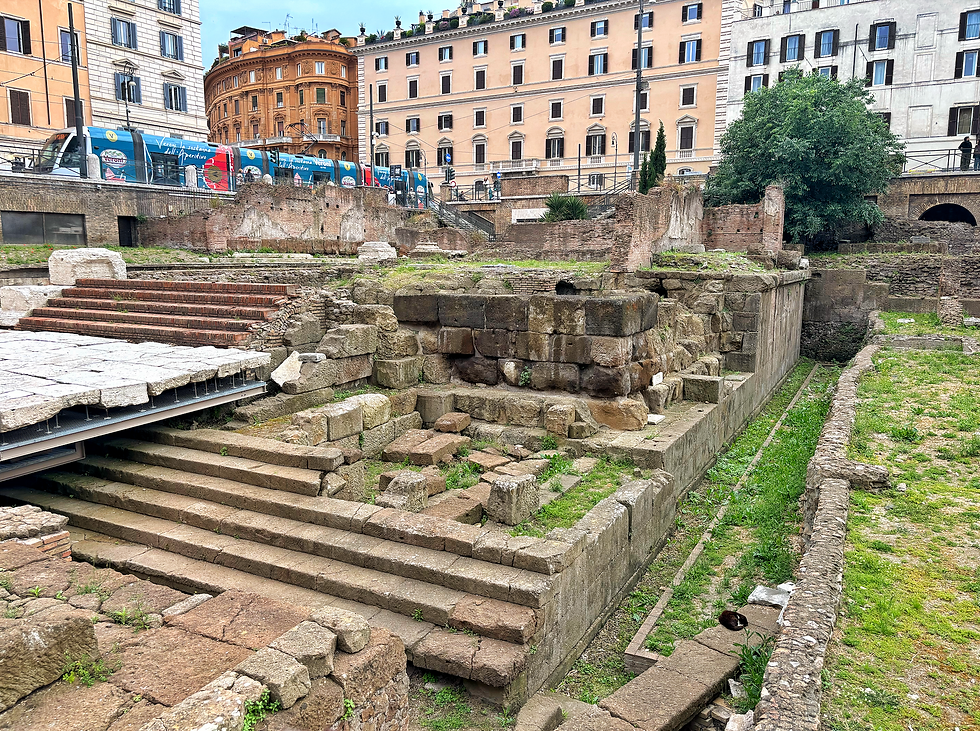
The visit itself doesn’t need to take half a day, which is part of its appeal. You can experience it as a focused archaeological stop for around a half hour, then continue toward lunch, coffee, churches, markets, or whatever Roman temptation catches your eye next.
I would still recommend giving it enough time to settle in. Walk the route, read the panels, look back from different angles, and resist the urge to treat it as a quick box to tick. Rome is generous to people who slow down, and this site rewards that generosity with layers of history hiding in plain sight.
All in All
By the time you leave, Largo di Torre Argentina has likely given you more than you expected. It offers Republican temples, political drama, sacred architecture, modern conservation, and cats with better real estate instincts than most of us will ever have.
More importantly, it gives you one of those essential Roman experiences where the city reveals itself in layers, with ancient stone below, modern life above, and a story that keeps unfolding between them.
If you are planning a trip to Rome, make space for the Largo di Torre Argentina Archaeological Site in your itinerary. Rome is full of famous icons, and many of them are unforgettable, yet this sunken sacred area in the middle of the city has a quieter magic that deserves to be experienced in person.

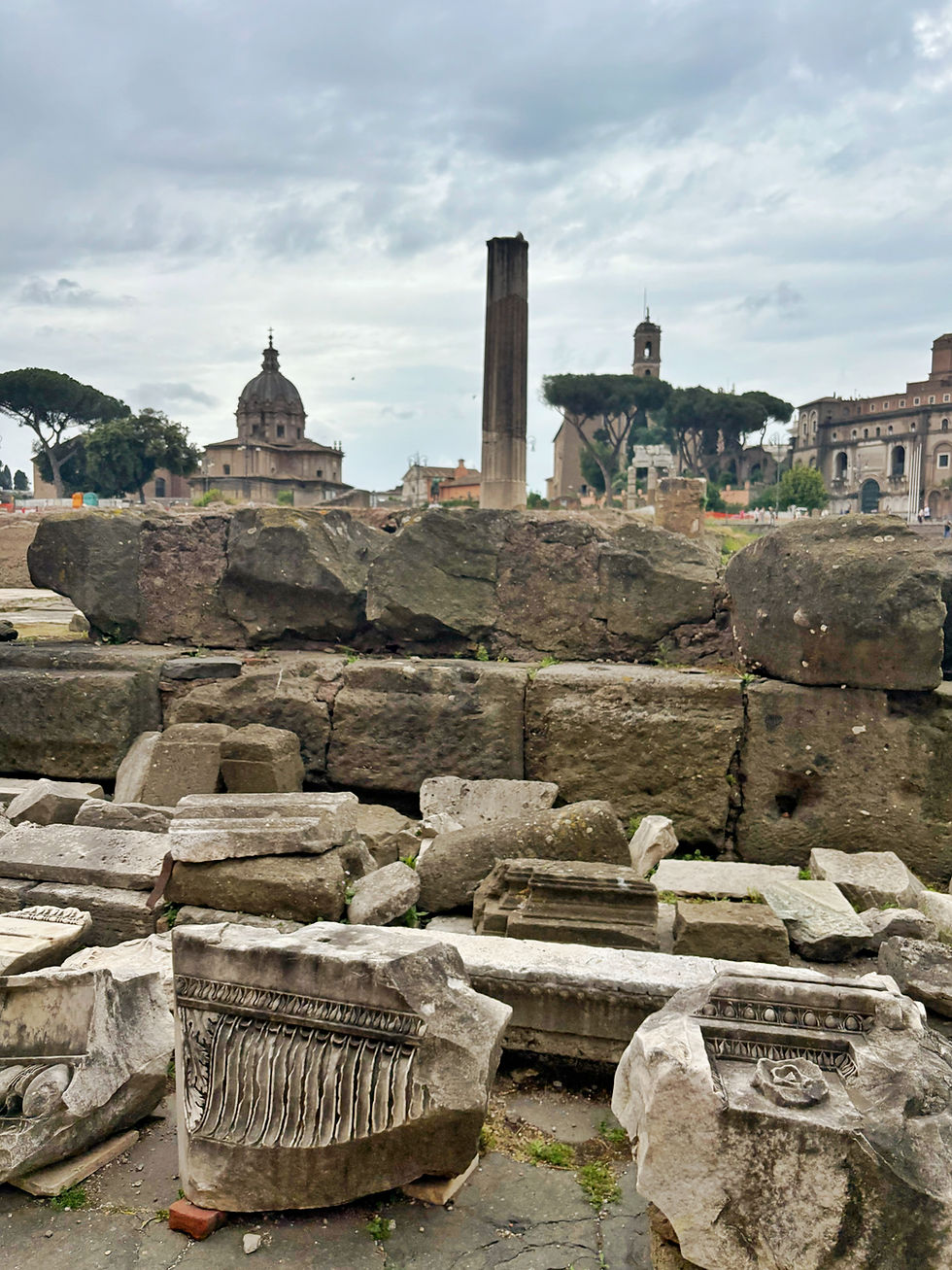

Would you recommend buying tickets in advance? Or was there not a long line/not too crowded?