


Villa Torlonia Museums and Park: A Curious Rome Guide

Visit the Villa Torlonia museums in Rome, featuring its park, Casino Nobile, Casina delle Civette, Serra Moresca, stained glass, and hidden history.

I know I’ve said it a million times before, but Rome has a habit of overwhelming the senses in ways that somehow feel both exhilarating and mildly concerning for your long-term stamina.
A single day in the city can involve navigating crowds around the Pantheon, staring up at ceilings painted by Renaissance masters, crossing chaotic intersections with the confidence of somebody who has briefly accepted fate, and consuming enough espresso to legally qualify as a supernatural entity. Then, seemingly out of nowhere, the city changes pace entirely.
That shift happened to me the moment I stepped through the gates of Villa Torlonia.
The traffic noise softened beneath the canopy of umbrella pines, the atmosphere became noticeably calmer, and the monumental grandeur that defines so much of central Rome gave way to something stranger, quieter, and infinitely more eccentric.
Within the space of a single afternoon, I wandered through aristocratic ballrooms covered in mythological frescoes, fairy-tale rooms glowing with stained-glass owls, Moorish towers inspired by the Alhambra, underground wartime bunkers, hidden pathways, and elaborate artistic fantasies that felt wildly disconnected from the Rome most travellers imagine before arriving.
What surprised me most was how few people were talking about it. In fact, no one was talking about it, save for some of my local friends who insisted that I visit.

Among the many famous things to do in Rome—you know, the Colosseum, the Roman Forum, and so forth—Villa Torlonia somehow remains one of the city’s most fascinating hidden gems, despite containing some of the most imaginative architecture and decorative arts I have encountered anywhere in Italy.
It’s the sort of place that slowly unveils itself through details, rather than spectacle, rewarding visitors who take the time to wander carefully through the grounds and museums. Rushing from landmark to landmark with a tightly scheduled itinerary and a rapidly melting gelato in hand is simply not the way to do things here.
For travellers who love destinations with layered histories, unusual architecture, and deeply personal stories hidden behind ornate walls, Villa Torlonia offers one of the most memorable experiences in the Eternal City. Plus, its three museums are part of Rome’s MIC Card program, meaning that I could enter them all for free (and you can too, if you’re a permanent or long-term resident)!
Villa Torlonia Museums and the Park’s History
Before the Villa Torlonia museums became one of the most intriguing cultural sites in Rome, the estate existed primarily as agricultural land owned by the Pamphilj family during the seventeenth century.
Everything changed in the early nineteenth century, when banker Giovanni Torlonia purchased the property and transformed it into an extravagant aristocratic residence designed to showcase both the family’s enormous wealth and its growing social influence within Roman society.

Architect Giuseppe Valadier was tasked with reshaping the grounds into a grand neoclassical villa complex, surrounded by landscaped gardens, ornamental structures, artificial ruins, decorative lakes, and elaborate pathways, all intended to impress visitors from the moment they arrived.
The result was not merely a country estate, but an enormous theatrical environment where architecture, mythology, symbolism, and spectacle blended together in remarkably imaginative ways.
Even today, wandering through the park feels wonderfully cinematic, because the landscape unfolds gradually rather than revealing itself all at once. Long shaded paths curve between palms, towering pines, and hidden architectural surprises, creating the strange sensation that the estate is constantly shifting identities as you move through it. So, Valadier’s work is still a success, even in the modern era.
One moment, you are staring at an imposing neoclassical palace that feels entirely Roman in character, while the next, you find yourself facing a whimsical stained glass cottage that looks as though it belongs in the middle of an illustrated fairy tale.
The estate’s history became considerably more complicated during the twentieth century, when Benito Mussolini (yeah, that guy) established his residence within the villa from 1925 until 1943, renting the property from the Torlonia family for the symbolic price of one lira annually (which is €0.000516…in today's equivalent, that's €0.000030, or around $0.000048 CAD or $0.000035 USD).
During the Second World War, underground shelters and bunkers were constructed beneath the estate, adding another dramatic historical layer to a site that already carried centuries of artistic ambition and aristocratic symbolism.
Like many historical sites in Rome, Villa Torlonia eventually fell into severe neglect after the war. Decorative elements disappeared, stained glass shattered, interiors deteriorated, and sections of the estate became nearly unrecognizable through decades of abandonment and unfortunate vandalism.
Extensive restoration projects in recent decades slowly revived the property, allowing visitors to once again experience the eccentric personality that originally made the estate so remarkable. While it doesn’t land on the typical Rome travel guide, it really should!
What makes the park especially appealing today is its atmosphere; while central Rome often feels packed with tourists moving rapidly between landmarks, Villa Torlonia maintains a calmer rhythm that encourages lingering.
Locals read beneath the trees, children run through the gardens, couples picnic quietly on the grass, and visitors drift slowly between museums without the overwhelming pressure that can accompany some of the city’s more popular attractions.
There is something deeply refreshing about experiencing a side of Rome that feels lived in, rather than performed.
Inside the Lavish Casino Nobile
At the centre of the estate stands Casino Nobile, the grand residence originally designed as the Torlonia family’s primary villa and ceremonial showpiece. From the outside, the structure immediately communicates aristocratic power through its monumental neoclassical façade, elegant columns, symmetrical design, and commanding position overlooking the grounds.
Inside, however, the atmosphere becomes far more personal, with a theatrical, unexpectedly eccentric side. Walking through the museum feels less like visiting a formal palace and more like entering the private imagination of a family obsessed with incorporating symbolic elements, including mythological themes, into decorative arts and social prestige.

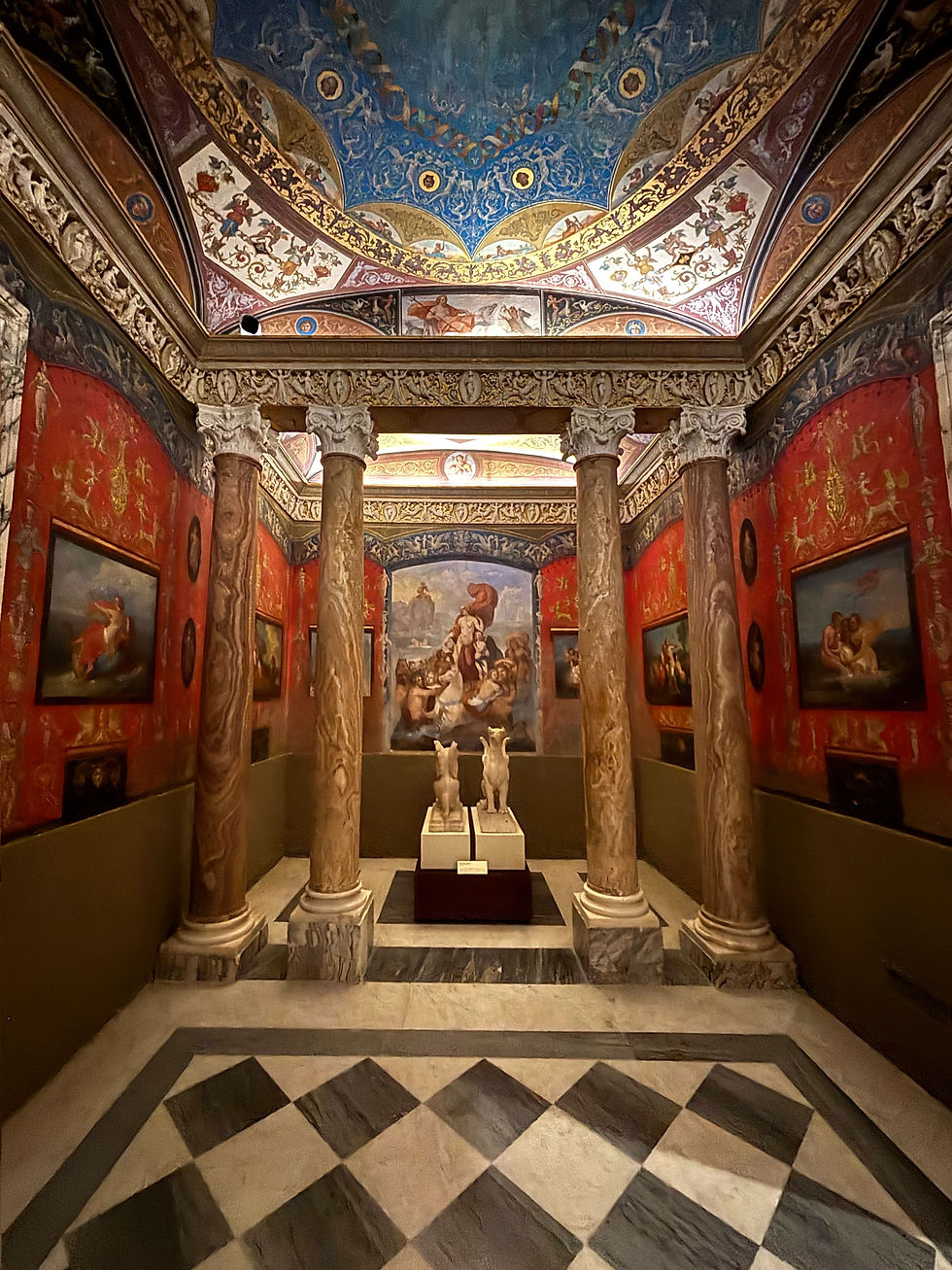
Nearly every room contains elaborate frescoes, illusionistic paintings, sculptural details, and carefully restored decorative schemes that transform ceilings and walls into overwhelming visual narratives filled with gods, allegories, celestial imagery, and symbolic references to power and immortality.
One room in particular remains fixed in my memory long after I left the museum: The bedroom, decorated with painted canopy drapes and dreamlike imagery dedicated to Morpheus and the mythology of sleep, carries an atmosphere that feels simultaneously beautiful and slightly unsettling, especially after learning that the room was associated first with Giovanni Torlonia (and later, with fascist dictator Mussolini himself).
Throughout the villa, a recurring tension between artistic splendour and historical discomfort lends the museum a surprising emotional complexity.
The Ballroom remains one of the most visually impressive spaces in the residence, with ceilings crowded by allegorical figures representing the passage of time and symbolic celebrations of aristocratic legacy. Decorative roses, comets, phoenixes, and heraldic imagery recur throughout the villa, reinforcing the Torlonia family’s desire to transform architecture into an elaborate statement of prestige and permanence.

What I appreciated most while moving through the museum was how much personality still survives within the interiors. The villa never feels cold or overly formal, as some aristocratic residences can. Instead, it feels deeply human, filled with ambitious decorative choices, moments of theatrical excess, and fascinating artistic risks that occasionally border on wonderfully absurd.
There is a sincerity to the extravagance that somehow makes the experience more engaging, instead of less…if that makes sense.
The museum also provides insight into elite Roman society during the nineteenth and early twentieth centuries through its restored furnishings, ceremonial rooms, reception halls, and private living quarters.
Reading about the painstaking restoration process added another layer of appreciation, as many decorative schemes and furnishings had to be reconstructed from archival photographs, as well as recovered fragments and historical documentation, after years of deterioration.
Even visitors who are not typically drawn toward decorative arts may find themselves unexpectedly captivated here, largely because the interiors never stop surprising you. A room inspired by ancient Egypt suddenly appears beside a richly painted salon, while hidden details reveal themselves gradually through ceilings, mosaics, and illusionistic wall paintings that reward close attention.
Casina delle Civette and Its Stained Glass World
If the main villa represents aristocratic grandeur, Casina delle Civette feels like the physical manifestation of somebody’s wonderfully unrestrained imagination.

Originally conceived during the nineteenth century as a modest Swiss-style retreat, the structure evolved over time into one of the most distinctive Art Nouveau residences in Italy after Prince Giovanni Torlonia transformed it into a highly personal artistic refuge filled with symbolism, decorative experimentation, stained glass, and architectural fantasy. Today, it remains one of the most enchanting places in Rome.
Even before entering the building, the exterior immediately captures attention with its asymmetrical towers, decorative loggias, elaborate ironwork, steep roofs, and whimsical details that evoke a magical woodland mansion hidden within the Roman landscape. Then you begin noticing the owls.
They appear everywhere.
Owls perch within stained-glass windows, emerge from decorative motifs, and quietly recur throughout the structure as symbols woven into the artistic identity of the house itself. The result feels eccentric without becoming overwhelming, playful without losing sophistication.
Inside, the craftsmanship becomes extraordinary.
Nearly every room glows with intricate stained glass depicting swallows, peacocks, ivy, roses, dragonflies, flames, and delicate geometric patterns created by artists such as Duilio Cambellotti, Cesare Picchiarini, Umberto Bottazzi, and Paolo Paschetto.

Rather than functioning as isolated decorative pieces, the windows shape the emotional atmosphere of each room by filtering coloured light across the interior—including the walls, ceilings, and floors—in constantly shifting patterns.
The Room of the Swallows remains especially beautiful to this day, with its soft blue stained glass filling the space with a calm, dreamlike quality, while painted birds appear frozen mid-flight across the decorative surfaces.
Elsewhere, the Room of the 24 Hours presents symbolic figures dancing beneath a painted cupola, as the famous Owl Room surrounds visitors with delicate stained-glass branches where tiny owls sit hidden among twisting vines.
What makes the house particularly moving is knowing how much of it was almost lost forever. A devastating fire in 1991 caused enormous damage throughout the structure, destroying sections of the interiors and threatening many of the decorative elements that made the building so unique.

Restoration specialists spent years reconstructing the house using surviving fragments, archival photographs, preparatory sketches, and traditional artisan techniques to preserve the villa's extraordinary artistic identity.
There is also an undeniable charm to the entire place that makes it feel deeply personal and not at all museum-like. Some rooms contain elaborate peacock-stained glass surrounding decorative vases, while others preserve fragments of majolica bathrooms depicting mythological nymphs.
Every corner feels infused with the personality of the people who designed it, creating a ‘museum’ experience that feels intimate, emotional, and endlessly curious. In my opinion, it’s undoubtedly one of the most magical hidden spots in Rome. I genuinely could have spent hours inside simply watching the light move across the stained glass.
The Dreamlike Complex of the Serra Moresca
Then, there is the Complex of the Serra Moresca, which somehow manages to make the rest of Villa Torlonia feel comparatively restrained.

Designed by architect Giuseppe Jappelli between 1839 and 1840, the complex was inspired by Moorish architecture and the exotic atmosphere of the Alhambra in Granada, transforming part of the estate into a theatrical fantasy environment filled with coloured glass, palm trees, decorative towers, artificial grottoes, waterfalls, and exotic vegetation intended to astonish aristocratic guests.
Seeing the restored complex in person feels genuinely surreal, as the atmosphere changes so dramatically from the surrounding Roman landscape that it almost feels as though you have stepped into another country altogether. Geometric patterns cover the architecture while coloured glass glows against the sunlight, creating a visual environment that feels both jaw-dropping and simultaneously romantic.
The Moorish Tower remains one of the most fascinating structures within the estate, especially considering that it once functioned not only as an architectural spectacle, but also as a source of elaborate entertainment.
Inside, a mechanical dining table system allowed meals to rise dramatically from the kitchen below through an opening in the floor, turning dinner into a carefully staged performance designed to impress guests with both luxury and technological novelty. Literally, this is something I’d install in my own house, if I could.

Nearby, the artificial grotto introduced visitors to a humid subterranean fantasy world inspired by mythological caves inhabited by nymphs and water spirits. Waterfalls, moss-covered surfaces, stalactites, and reflective pools originally combined to create an atmosphere that blurred the boundaries between architecture and nature in deeply imaginative ways.
Learning about the site's restoration history makes it even more impressive, as much of the complex had collapsed or severely deteriorated during decades of abandonment (much like the other sites within Villa Torlonia). Roofs disappeared, stained glass shattered, decorative surfaces crumbled, and portions of the artificial grotto became nearly inaccessible.
As at the other locations, restoration specialists reconstructed surviving elements using archival documentation, historical photographs, recovered fragments, and traditional craftsmanship to revive the extraordinary atmosphere of the complex.
What I loved most about the Serra Moresca was how unapologetically imaginative it felt. The estate was never designed merely as a collection of elegant buildings surrounded by gardens; it was intended to continually surprise visitors through fantasy, spectacle, symbolism, and artistic experimentation, and nowhere is that ambition more evident than in this remarkable Moorish fantasy landscape.
Other Historic Buildings Throughout the Park
Even after visiting the main museums, Villa Torlonia continues to reward visitors who take the time to wander carefully through the grounds; additional structures scattered throughout the estate reveal even more about the ambitions and personality of the Torlonia family.
The Theatre of Villa Torlonia remains among the most impressive examples. Originally constructed in the nineteenth century as a private performance venue for aristocratic entertainment, the theatre fell into severe disrepair before (you guessed it) undergoing extensive restoration. Even viewing the exterior offers insight into the importance of spectacle and performance in the elite Roman society of the period.
Elsewhere in the park, the Medieval Village introduces another unexpected architectural identity into the estate through its romantic reinterpretation of medieval forms and decorative styles. Like much of Villa Torlonia, the area reflects nineteenth-century fascination with historical revivalism and theatrical design, creating spaces intended to evoke emotional atmosphere rather than historical accuracy.

Beneath the estate lie the ancient Jewish Catacombs, which predate the Torlonia family’s ownership of the land by centuries and quietly remind visitors of how many layers of history lie beneath Rome's surface. Few cities in the world contain this kind of historical density, where aristocratic fantasy landscapes stand above burial spaces dating back to antiquity.
I also found enormous pleasure in the smaller details scattered throughout the park because Villa Torlonia constantly rewards curiosity. Decorative bridges appear unexpectedly between pathways, while isolated towers, unusual façades, hidden staircases, and ornamental structures gradually emerge through the landscape.
Thus, even walking between museums becomes part of the experience.
All in All
By the time I finally left the estate, the late-afternoon light had begun filtering through the stained-glass windows and tree branches, casting that soft golden glow that makes Rome feel almost impossibly romantic. Looking back toward the whimsical towers and owl-covered windows of the villa, I realized that Villa Torlonia succeeds precisely because it refuses to fit neatly into a single category.
It is simultaneously a park, an artistic experiment, a historical archive, an aristocratic fantasy, and one of the most memorable Rome city museums you can experience.
So, if you find yourself craving a quieter side of the Eternal City—one where symbolism, eccentric architecture, stained glass artistry, and layered history coexist beneath towering pines and hidden pathways—make time for Villa Torlonia. Wander slowly through the gardens, linger inside the museums, and allow yourself the rare pleasure of being genuinely surprised by Rome.

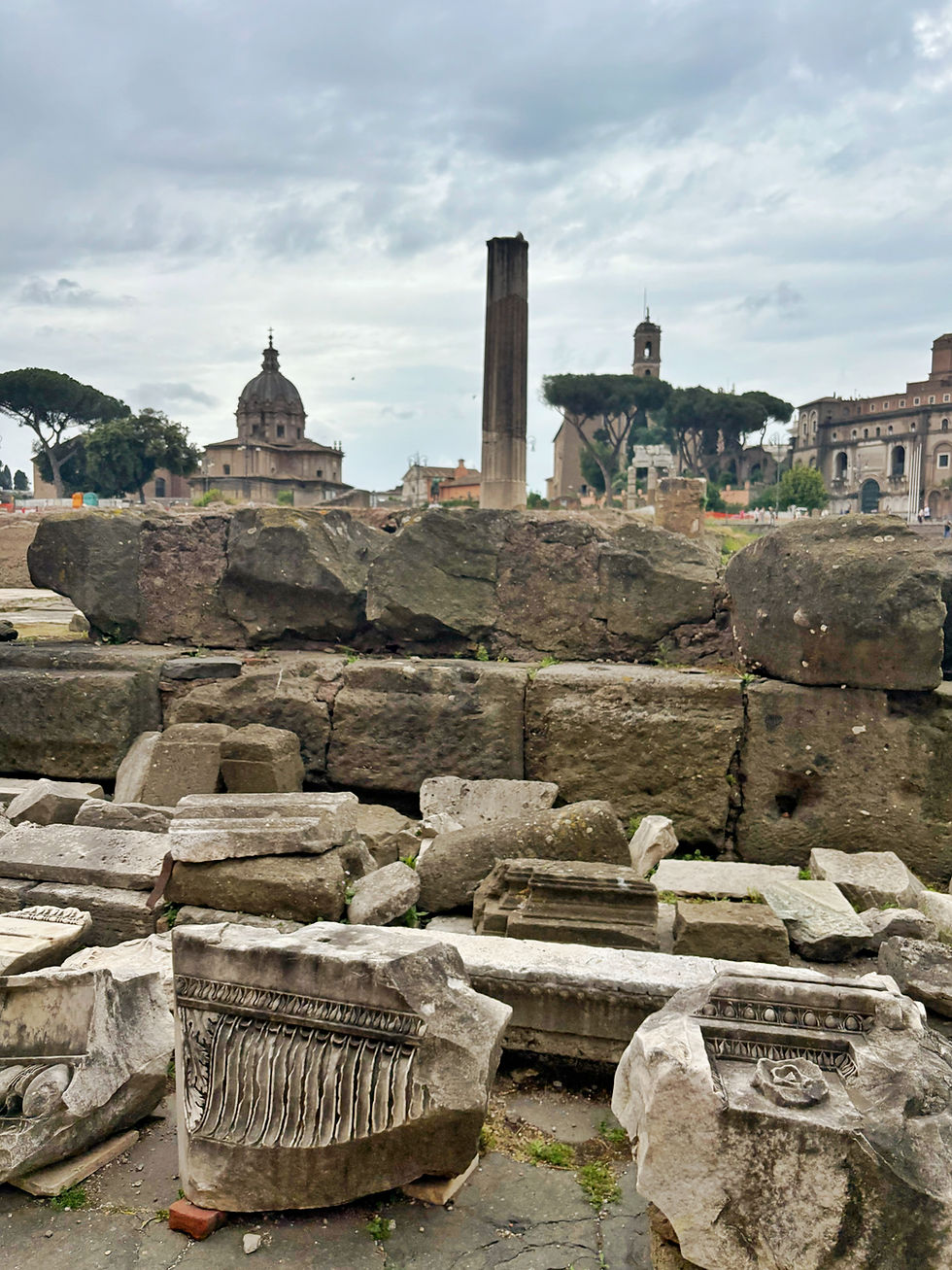

The Villa Torlania restoration project must have been huge as the painstaking restoration process definitely added a layer of appreciation for what is seen on the site today.
Given the history you shared, the abandonment and destruction over there, it is remarkable!
😀I like the peaceful atmosphere at Villa Torlonia; I hadn't known about this spot in Rome before, and I feel it's well worth a visit—the architecture is wonderful, and the fact that it isn't packed with tourists is definitely a plus.
Oh wow, look at all the colors in the rooms. I'd be enthralled by it all. I hope I can visit one day.
This article looks great! I would love to visit Rome one day! 💙