


Best Things to Do in Istanbul: A First-Timer's Guide

Plan your first visit with the best things to do in Istanbul, and see how the city’s layered history shapes a trip that stays with you long after returning home.

Istanbul is very good at dismantling a sensible itinerary in the most enjoyable way possible. On our first morning, the route looked entirely manageable on my phone, travelling via a plan we formulated on our phone notes during a two-hour-long video call.
While it certainly helped as a starting point, the city nonetheless seemed to take that confidence as a personal challenge and began distracting us almost immediately.
A doorway led somewhere unexpected, and a glimpse of the Bosphorus made us stop walking. Even the neighbourhood cats seemed to have opinions about where we should go next (but, alas, declined to provide useful directions).
A search for Istanbul must-see attractions quickly brings up the famous places that dominate the skyline and fill the history books. They have earned their reputation, certainly, and each one reveals something important about the city. However, our trip became all the richer once we also made room for experiences that brought us closer to Istanbul’s living and breathing culture.
That balance shaped this Istanbul itinerary for first-time visitors, which focuses on experiences that make the city easier to understand.
Go Underground for the Best Things to Do in Istanbul

Constantinople needed a reliable water supply long before modern plumbing arrived, especially because the historic peninsula had limited natural freshwater.
Aqueducts carried water into the capital from beyond the city, and underground cisterns stored it where it could remain available during dry weather or a siege. The system supported daily life for generations, consequently revealing to us how carefully the ancient city had to plan for survival.
Though pricey to enter, we visited the Basilica Cistern, which has become one of the most recognizable Istanbul tourist attractions.
Emperor Justinian I commissioned it during the sixth century to supply water near the Great Palace, and its vast ceiling rests on hundreds of columns, many of which came from earlier Roman buildings. Honestly, it’s breathtaking, and looking at the rows upon rows is exhilarating in and of itself.
The reused stone gives the chamber an irregular beauty, because the capitals do not all match. As well, two carved Medusa heads wait near the far end, where they provide a rather dramatic reward for anyone who has resisted taking fifty photographs of the columns already. I mean, even for those who haven’t resisted—after all, I never did.
The descent into the space creates a lot of the excitement. Street noise fades with every step, and the air becomes noticeably cooler as the chamber opens below. Reflections stretch across the shallow water beneath the walkway, making the space appear deeper than it is.
Here, the lighting preserves enough shadow to keep the atmosphere mysterious, with the chamber feeling a lot like a film set built around an extraordinary piece of ancient infrastructure (it was in the movie Inferno, actually, which I had watched on the plane trip in!).

The Basilica Cistern is the most famous option in a much larger underground network, and travellers seeking another restored example can consider Şerefiye Cistern. In fact, smaller sites beneath the historic centre may offer a more affordable visit, occasionally with no admission fee.
Check the current details before choosing one, as opening arrangements can change. The important part is seeing at least one cistern, since Istanbul looks very different once you realize how much history lies beneath your feet and out of sight.
Let Istanbul’s Mosques Stop You in Your Tracks
The stunning Hagia Sophia carries almost 15 centuries of history beneath a dome that still seems impossibly ambitious.
The present building was completed during the reign of Justinian I, and originally served as an Eastern Roman cathedral. It then became an imperial mosque after the Ottoman conquest in 1453 and, following a period as a museum, Hagia Sophia returned to use as a mosque in 2020.
Today, its architecture bears visible traces of the faiths that have shaped the building over time, giving the interior an emotional weight that photographs cannot fully convey.
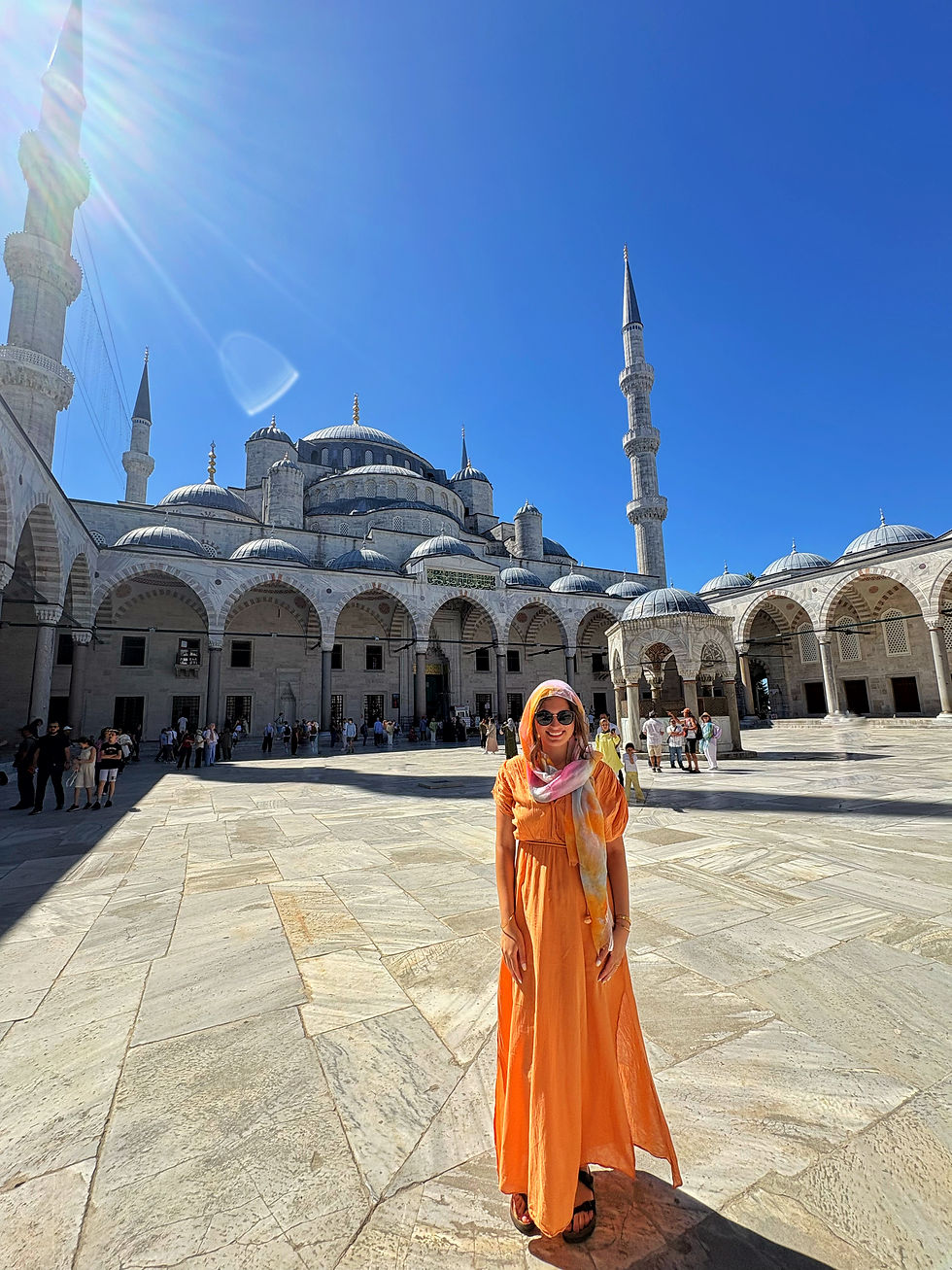
The Blue Mosque stands nearby and can be entered without an admission fee (outside of prayer periods). Its broad courtyard creates a beautiful approach to a prayer hall that glows with famous İznik tiles.
Of course, Istanbul has many other mosques where visitors can appreciate Ottoman architecture in a quieter setting. Süleymaniye Mosque, for instance, is especially memorable because its elevated position offers a sweeping city view, and its spacious complex encourages you to slow down.
That all said, mosques have long played an active role within their neighbourhoods; historic Ottoman complexes often supported education through an attached school, while another part of the complex might provide food for people in need. The courtyard gave local residents a shared place to gather, and that sense of community remains visible today.
A mosque should therefore be approached as a living space whose purpose continues beyond the beauty of its architecture.
Respectful visiting requires very little effort, because modest clothing should extend from the shoulders to below the knees, with a scarf kept available for women who need to cover their hair. Shoes must be removed before stepping onto the carpet, which makes clean socks a wise choice (AKA: this is not the ideal moment to learn that your favourite pair has developed an ambitious ventilation system).
Prayer remains the building’s primary purpose, which means your timing should respect the worship schedule and your voice should stay low inside. These sacred spaces belong among the best places to visit in Istanbul, and considerate behaviour allows everyone to experience them peacefully.
Get Totally Lost in Istanbul’s Bazaars
The Grand Bazaar began taking shape after Mehmed II conquered Constantinople in 1453. What started as a covered commercial centre expanded as traders established nearby workshops, eventually creating the enormous market district that visitors enter today.
Repeated rebuilding has reshaped its lanes, with commerce continuing through centuries of change. It’s actually that long history that gives the bazaar an energy that feels very different from a modern shopping centre, despite its touristic tendencies.
Trying to follow a precise route through the Grand Bazaar can become unnecessarily stressful, because the market seems to rearrange itself whenever you look away for a split second.

A relaxed wander, though, gives you time to notice the decorated ceilings overhead. Quieter hans sit beyond some of the busiest passages and offer a glimpse of the older commercial world that developed around the main market. The experience becomes far more enjoyable when reaching a specific exit is no longer the immediate goal (after all, it’s easier to orient yourself once you exit, wherever that may be).
Shopping here rewards patience; if an item is expensive, visit another shop before making a final decision so you can get a clearer sense of the actual price. Bargaining is expected in many places, and a friendly tone usually produces a better conversation, but decide what you are prepared to pay before the negotiation gathers momentum.
Walking away politely is always acceptable, even after tea has appeared and a carpet has begun planning its move into your home.
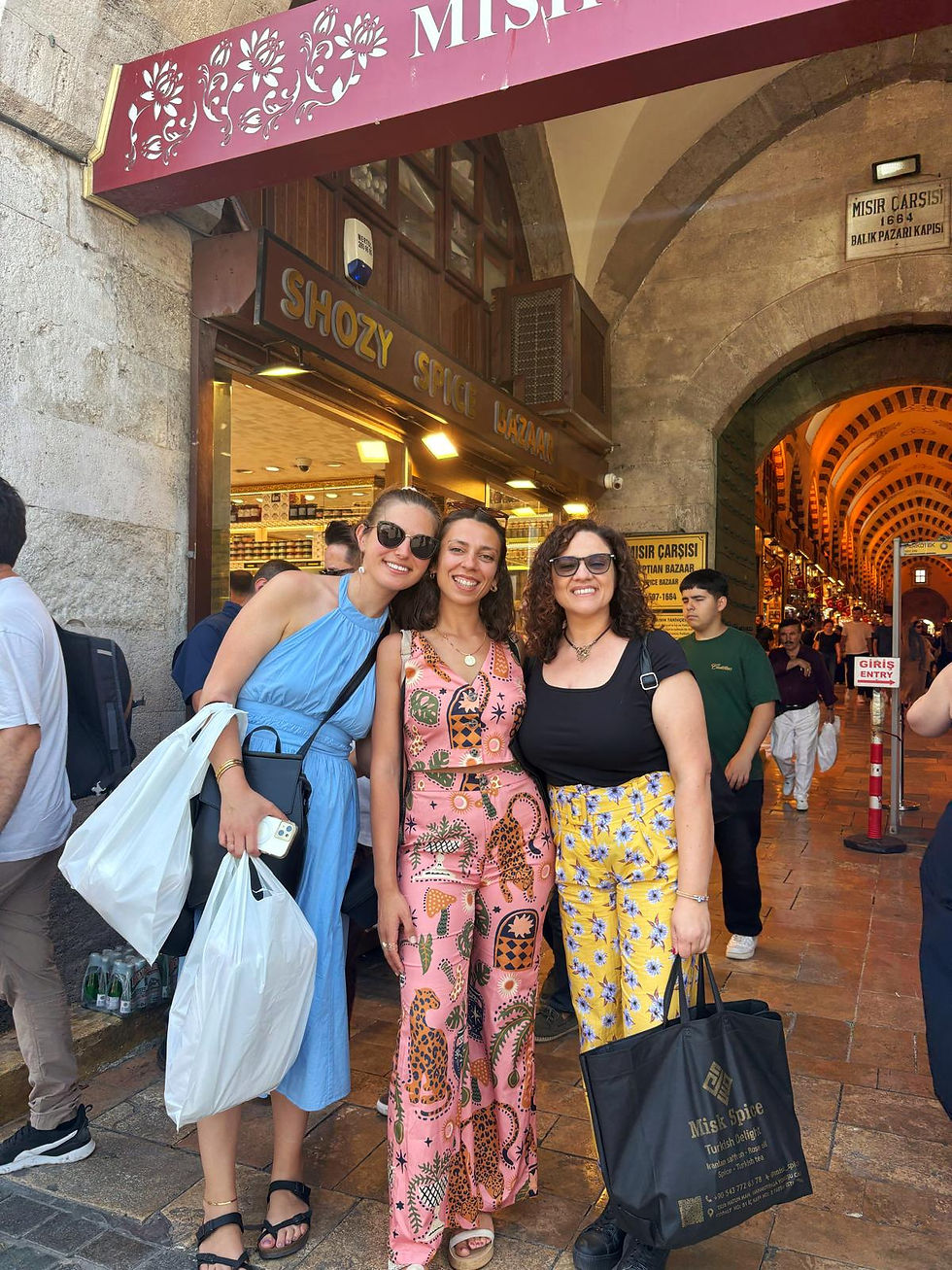
The Spice Bazaar in Eminönü offers a more compact experience within a seventeenth-century building historically connected to the New Mosque complex. Revenue from the market helped support the religious foundation, which tied everyday commerce directly to community life.
Here, the scent reaches you before many of the stalls come into view, and Turkish delight is offered with impressive confidence. An early visit offers a gentler pace and leaves time to explore the surrounding streets, since the market extends well beyond the covered building.
(To discover my full Grand Bazaar and Spice Bazaar guide, click here!)
Give Dolmabahçe Palace the Time It Deserves
Dolmabahçe Palace stretches along the European shore of the Bosphorus with the confidence of a building that knows everyone is looking at it. I mean, it’s because everyone is.
Sultan Abdülmecid I commissioned the palace during the 19th century, and the Ottoman court moved there from Topkapı Palace in 1856. Its design brought European influence into an imperial residence that still followed the needs of Ottoman court life. Baroque ornamentation gives the exterior its drama, and the waterfront location ensures the palace makes an equally impressive entrance when seen from a boat.
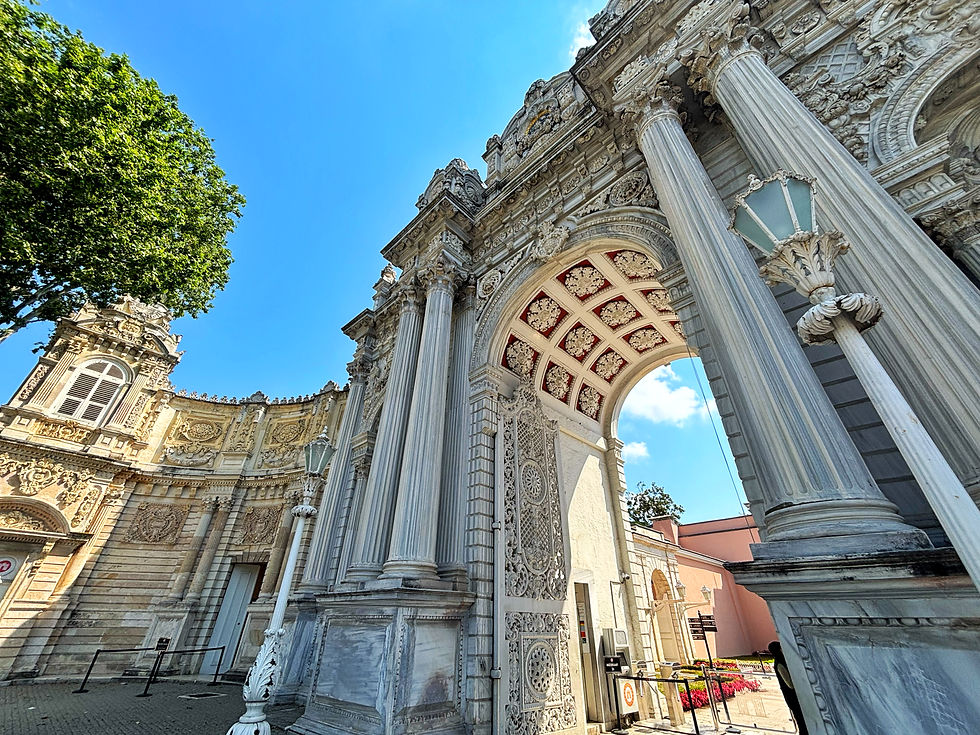
We reached Dolmabahçe too late to tour the interior (literally, the morning we had to catch our flight back home), which remains one of my regrets from the trip. Our schedule had looked reasonable that morning, a phrase that rarely survives contact with Istanbul traffic.
We nonetheless went through security and entered the front garden area without buying a palace ticket. From there, the scale of the façade was impossible to miss, because the ornate gates framed it beautifully. We also viewed the Dolmabahçe Clock Tower from outside, which made the stop worthwhile, even with limited time.
Naturally, I still wish we had been able to go inside. The Selamlık contains the formal rooms where the empire conducted state business, and its scale shows how carefully the court used architecture to communicate power. The Harem gives visitors a more private view of palace life, while the Ceremonial Hall is crowned by an immense dome, with a crystal chandelier hanging beneath it.
Mustafa Kemal Atatürk later used Dolmabahçe and died in the palace in 1938, adding another significant chapter to the building’s history.

If you are deciding what to see in Istanbul, reserve enough time for a complete palace visit and check the current ticket arrangements before going. As with most places in the city, an early arrival will make the experience feel less rushed. Once inside, an audio guide can explain the political meaning behind rooms that might otherwise register as an overwhelming amount of gold.
Our brief visit to just the complex’s exterior left me determined to come back to this gorgeous city as soon as I can, in order to experience this gorgeous palace in full.
Make a Souvenir You Will Actually Keep
A workshop changed the rhythm of our trip after several days spent looking at remarkable objects behind barriers.
The slower pace gave us time to speak with people in a relaxed setting and solved the souvenir problem, as the finished piece carried a memory that could never be replicated by something chosen quickly on the way to the airport.
We booked a mosaic lantern workshop and spent the session arranging coloured glass on a lamp, completely absorbed in the project taking shape right in front of us. The process required enough concentration to become our sole focus, but remained approachable for a beginner.

Each of us had a pretty clear idea of what patterns we wanted to create, as well as the colours we wanted to use, which made jumping in all the simpler. By the end, the pattern had become something I was genuinely excited to take home.
That lamp now sits on my bedside table, and when I switch it on, the coloured glass casts warm patterns of pink and green across the room, bringing me back to the evening when I made it. It’s become one of the few travel souvenirs in my home that serves a real purpose, which feels like a small domestic victory.
We enjoyed the workshop so much that we actually returned the next day to make perfume, after seeing it was another option offered.
The instructor explained how fragrance develops before helping us create our own blends. I made a perfume with a light fruit note that immediately reminded me of summer in Türkiye. I still think of the trip whenever I wear it, which confirms scent’s impressive ability to function like time travel without taking up more shelf space than another decorative bowl.
I suggest that you book a workshop early if you are visiting during a busy period, because small classes can fill quickly. Before you leave the workshops, ask how the finished item should be packed for travel, especially if your creation contains glass.
Watch Istanbul Change Colour from the Bosphorus
The Bosphorus defines Istanbul, with the European shore facing the Asian shore across a waterway that flows between the Black Sea and the Sea of Marmara. It has influenced the city’s growth for centuries, with control of the strait carrying enormous strategic value. Today, ferries remain part of daily life, carrying residents across a route that visitors travel mainly for the view.

A sunset cruise offers an immediate sense of how the city fits together (this is the one that we took, which I would highly recommend!).
From street level, the hills can make Istanbul feel endless, yet the water brings those fragmented views into one panorama. Dolmabahçe Palace appears in its full waterfront setting, which makes the façade even more impressive. Later, Ortaköy Mosque seems to sit directly beside the strait as the bridge rises behind it.

Commentary during the cruise can explain the history of buildings that would otherwise pass as beautiful scenery. It also helps clarify how the Bosphorus shaped life along the shore. Taking the cruise near the beginning of your stay gives you a useful overview of the city, and a place that catches your attention from the deck can then become the plan for another day.
The timing is especially good for photography, because stone façades take on a warmer colour as the sun drops, before the skyline gradually darkens over the water. Keep a secure grip on your phone when moving around the deck, since the Bosphorus does not need another camera in its possession.
Keep in mind, too, that even in the summer, a light layer will make the return journey more comfortable, especially once you stop taking photographs and give yourself time to take in the view without a screen in front of you. It gets chilly on the water in the evenings!
All in All
Truth be told, Istanbul does not need an elaborate sales pitch. The city makes its case through places that still feel connected to the lives once lived within them, and the best experiences help you understand that history without turning the trip into homework. There’s so much to learn, with enough room to wander whenever the original plan stops making sense.
If Istanbul has been waiting on your travel list, move it closer to the top by building an itinerary that gives the major sights enough time without filling every spare hour. Personally, on my return trip, I’ll keep the schedule lighter and make a firm reservation at Dolmabahçe Palace.
Start planning your own trip to Istanbul, Türkiye, with the expectation that the city will revise at least part of your itinerary once you arrive…in the best way possible, of course.

Comments